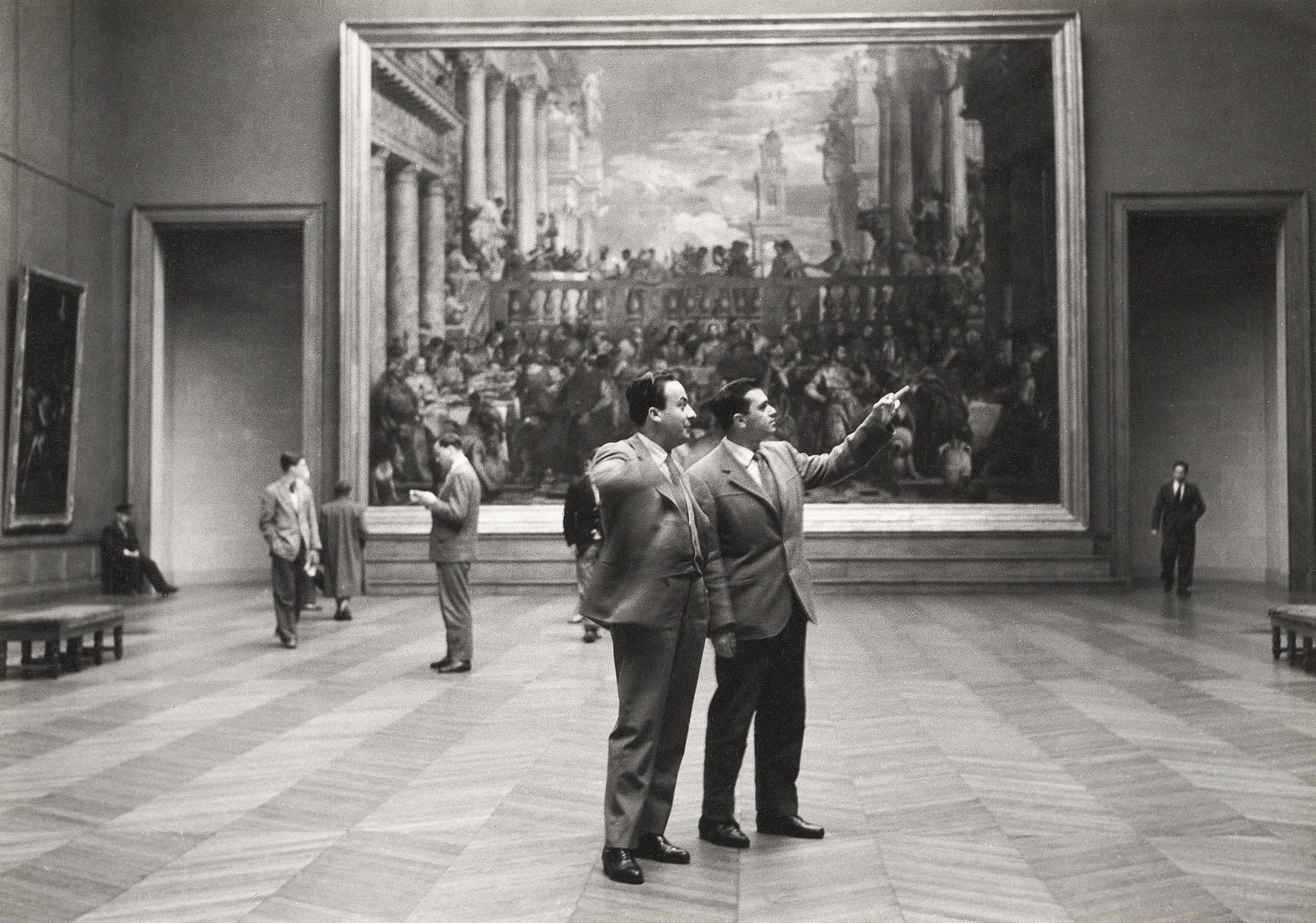
At the Musée d'Orsay, in the queue for the temporary exhibition, people are growing impatient.
It's long...
Noses glued to their phones, torn between the urge to edge a little closer to the person in front, to snatch the few centimetres separating them from the finish line, or, on the contrary, to ask the person behind, politely but firmly, to keep a reasonable distance from their arse.
A little further down the line, others are trying to work out how their bloody audioguides work. A Dutch or Norwegian family, who knows. The teenager, who has complained the whole trip, may be holding the strongest argument of her stay. This morning, at 9:43, something like a flash of brilliance.
Why did we get an audioguide? Do you know a single human being on earth who has felt even one second of happiness thanks to an audioguide...?
An exasperated sigh from the parents is the only answer. The teenager insists, holds her ground.
Not happiness, not even that, I'm not asking for that much. Pleasure, just pleasure. Has anyone ever told you: “It was extraordinary, we even had an audioguide”...?
The mother plays the appeasement card.
It was Aunt Hélène who suggested we...
Her daughter cuts her off at once.
Aunt Hélène? Are we talking about the same one? My Aunt Hélène, the one who has doubled her dose of antidepressants every quarter for fifteen years?
SLAP.
A little tap on the arm, rushing to the rescue of poor Aunt Hélène, ends the discussion. From Bergen or Amsterdam, it hardly matters. They all clumsily try to pass the time. To keep busy before reaching what they came for:
references lived as fantasies, which, a few metres from now, will finally become tangible;
canvases that will serve as backdrops for a few selfies;
and, for the more sensitive among them, art;
and why not, a few emotions.
Whatever reasons led them into this endless coil of red ribbon, they are all trying to dissolve their impatience, to shorten the wait, to contain the hurry to finally stand before the masterpieces they came to catch.
But if only,
if only they knew the irony playing out right there.
Not the irony of the Finnish audioguide handed to the Norwegian family, a mistake by the poor underpaid employee who, without meaning to, confirms every doubt the teenager had about this phoney technology.
NO.
The irony is that the two greatest masterpieces the museum has to offer them, the museum that convinced them to make this trip, and even to get scammed out of 200 euros by a fake taxi at CDG, are already there.
In this very room.
They would see them if they looked up from their screens.
Right in front of them.
They would see them if they finally raised their eyes.
Barely a few metres away.
They would see them if they stopped obsessing over the nature of Aunt Hélène's malaise, citing a reading, twenty years ago, of the DSM-IV.
Raising their eyes a little higher, they would discover two of the most decisive paintings in the history of modern French painting: A Burial at Ornans and The Painter's Studio, by Gustave Courbet.
Immense works, monumental, almost dizzying. Paintings that cannot be told. No, that isn't true.
Every painting can be told.
But those two, I don't know how to tell them.
Not with my tiny little pile of words.
Go and stand in that queue, you'll see. They are rare, those who stop, those who even notice they are there.
And if I'm telling you all this, it isn't out of intellectual pretension, nor out of a wish to separate those who know from those who don't.
No. It is simply because, to me, this scene and these two paintings crystallise the symptom of a far more serious and insidious illness of our contemporary societies:
The disappearance
of the gaze.