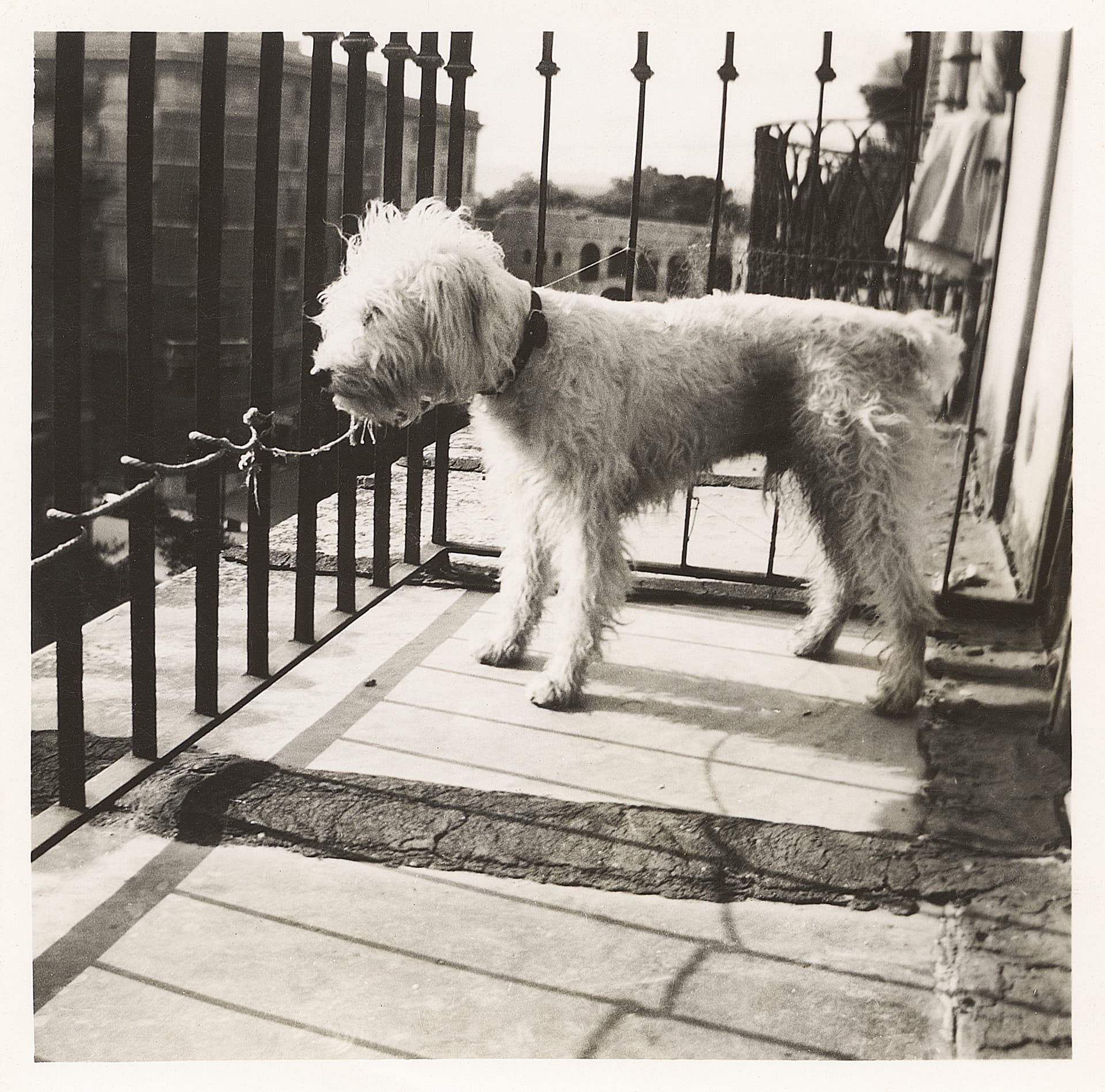
Between Unknowns was born of the opposite conviction:
The gaze is a language.
And little by little, this language is drowning, like those the elders, on the other side of the world, ended up no longer passing on. Out of weariness. Out of resignation. You know, those languages that don't vanish all at once. That fade out slowly, almost politely. As if afraid of being a bother.
And I can still hear you:
What can a few photographs found at the bottom of a box, at a flea market, do to stop a process that seems unstoppable?
What can photos taken in a hurry do? Memories that no one, until now, thought worthy of the slightest attention (otherwise they would probably never have ended up in our hands)?
What can a handful of strangers who collect other anonymous people do?
Perhaps the answer lies in the question.
It is this anonymity that, at last, offers “lookers” a rare field of freedom. Carte blanche to observe.
Freed of the intentions pinned beside the image. Of the speeches that steer our eyes. Of the biographical references that tell us what to understand, in what context, how to interpret...
Nothing! Nothing at all!
Or almost: we stand before anecdotal images, too common to deserve a second glance.
And yet, faced with this apparent banality, something resists. An almost vital reflex.
We look for meaning.
We can't help it.
We search, we doubt, we try to understand. And that is precisely where everything is at stake.
Looking to wrest things from their apparent insignificance. Looking perhaps even to escape absurdity.
Making meaning where we are told there is none. Finding beauty where it seems absent.
It has a name: poetry.
And do you know what saves a language? Poets.
This is what Between Unknowns must become: a factory of observers who, now without a guide, are condemned to become poets.
Poets who seek the overwhelming, the hesitation, the gesture, the detail that sends a shiver, there where, at first sight, there is nothing to see.
Because it is precisely when we think there is nothing to see that we must open our eyes.
There it is, a real
right to look(s).
Not much, but in the end, just about everything.
You can get rid of
the audioguide.